Our Story

From the Khyber to your table.

The recipes that travel with us are older than any kitchen they land in. Carried on caravans, refined over coals, served in Dhaka.

How we began

A kitchen, opened in good faith.

Peshawari Kitchen was founded in 2026 with a single conviction: that the cuisine of the North-West Frontier deserves a quiet, dignified home in Dhaka, Bangladesh. Not a buffet of compromises. Not a fusion. The food, as it was meant to be.

We are a young house with old hands. The recipes that move through our kitchen come from grandmothers, from spice traders, from cooks who learned at the iron tawa long before there was a menu. Our job is to be careful with them.

Authentic flavors aren't created overnight. They come from tradition, culture, and the hands of real chefs.

The Frontier

Three cuisines,
one Silk Road.

Peshawari, Afghan, and Pakistani cooking didn't evolve in isolation. They grew up together along the routes that once moved spice from the Indus to Central Asia. What you taste with us is that shared inheritance.

Peshawari

From the iron tawas of Qissa Khwani: coarse, fragrant, beef-forward. Our hand-pressed Chapli Kabab studded with pomegranate. Ranjha Gosht slow-cooked to a deep, indulgent richness. Shinwari karahi finished with raw chillies. Cuisine that doesn't apologize for the heat of its home.
Afghan

The cousin across the border: our Peshawari Kabli Pulao layered with tender beef, dried fruits and caramelised carrot. Afghani kababs softened with herb-laced cream. Almond-scented Badami Chicken. A cuisine of careful balance and gentle spice.

Pakistani

The wider table: biryanis layered dum-style with saffron and tender mutton, Mutton Nehari simmered through the night, daal makhani enriched with butter and cream. Comfort food refined by centuries of household craft.

The hands behind the food

Our chefs.

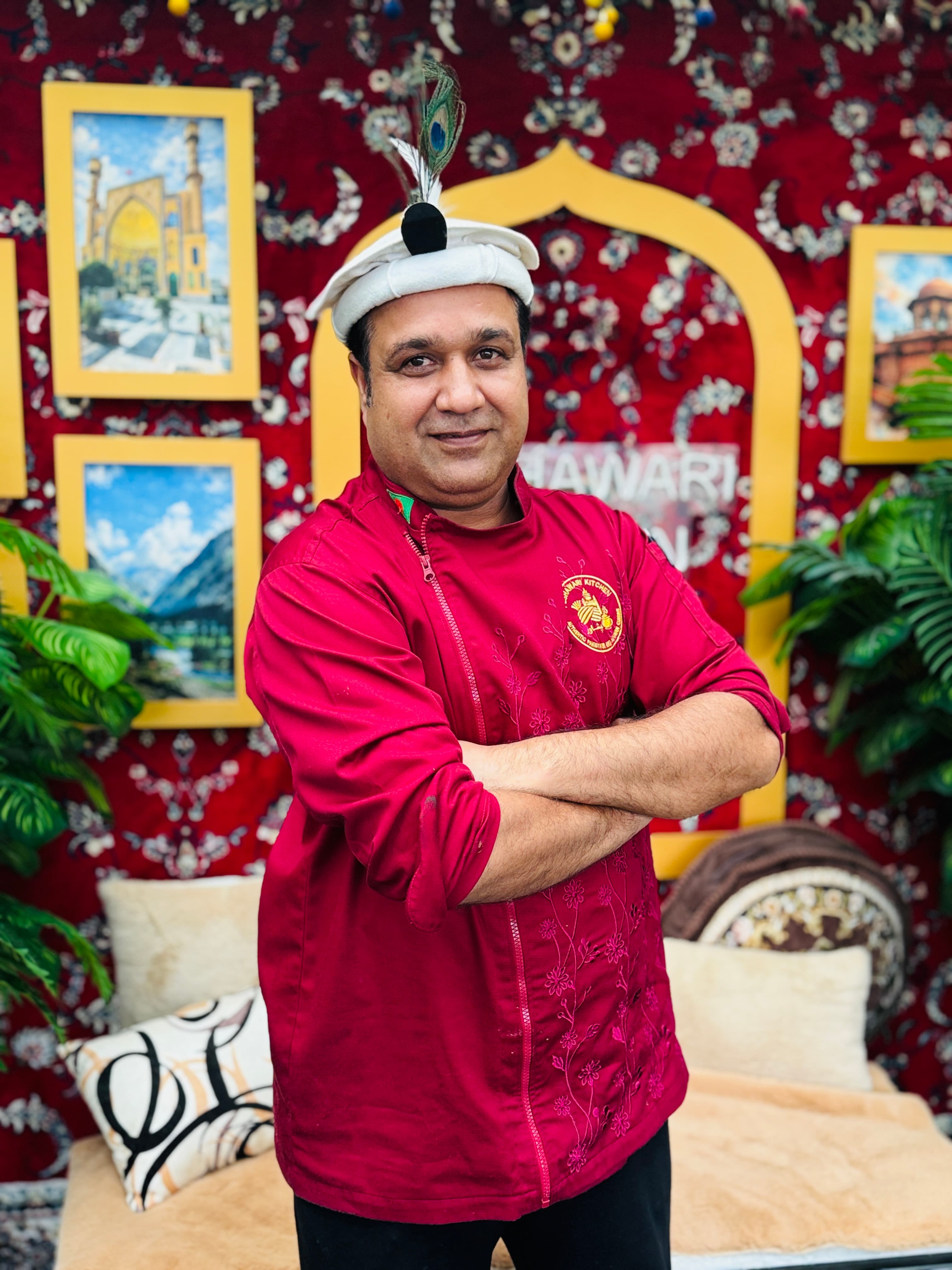
For the first time in Dhaka, the true taste of Peshawar is prepared by chefs who learned this food in its home city. Below, each specialist in their own discipline: the sigri, the tandoor, the karahi, and the slow pot.

Award-Winning Chef · Head Chef

Arif Khan

Peshawar, Pakistan

Industrial Chef Nominee · Culinary Awards 2025

Arif Khan trained in the kitchens of Peshawar before bringing that discipline to Dhaka. He is an all-rounder of authentic Peshawari and Afghan cuisine: pressing chapli kababs at the sigri, sealing biryanis under hand-kneaded dough, reading the tandoor by heat and touch rather than clock. His real signature is the slow-braised work, Ranjha Gosht, Namkeen Rosh, the dishes you do not rush and cannot fake. The kitchen, in many ways, is his. Every service runs through his hand before it reaches yours.

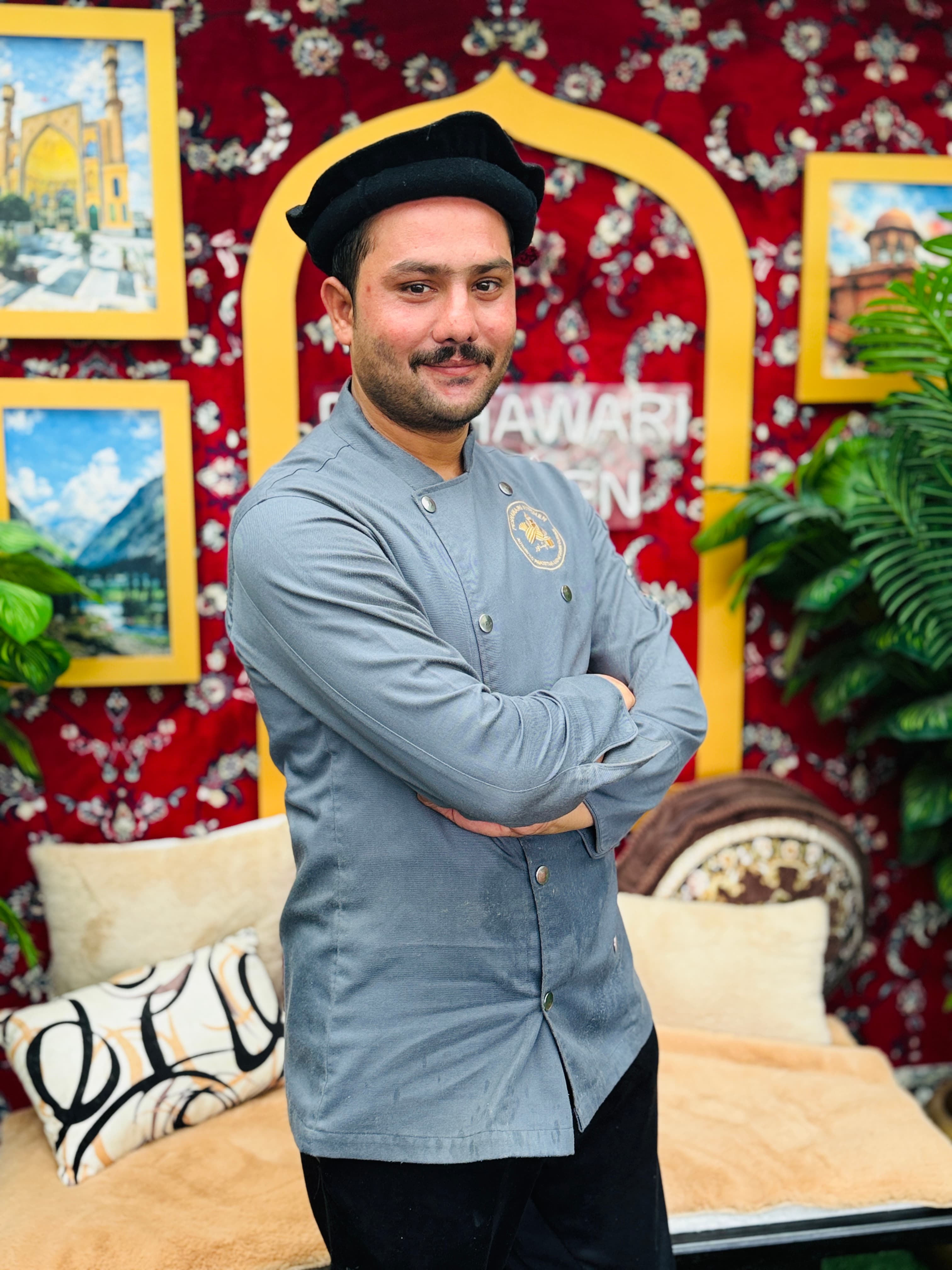
Zubair Khan

Master of the Sigri · Kebab & BBQ

Zubair Khan

Peshawar, Pakistan

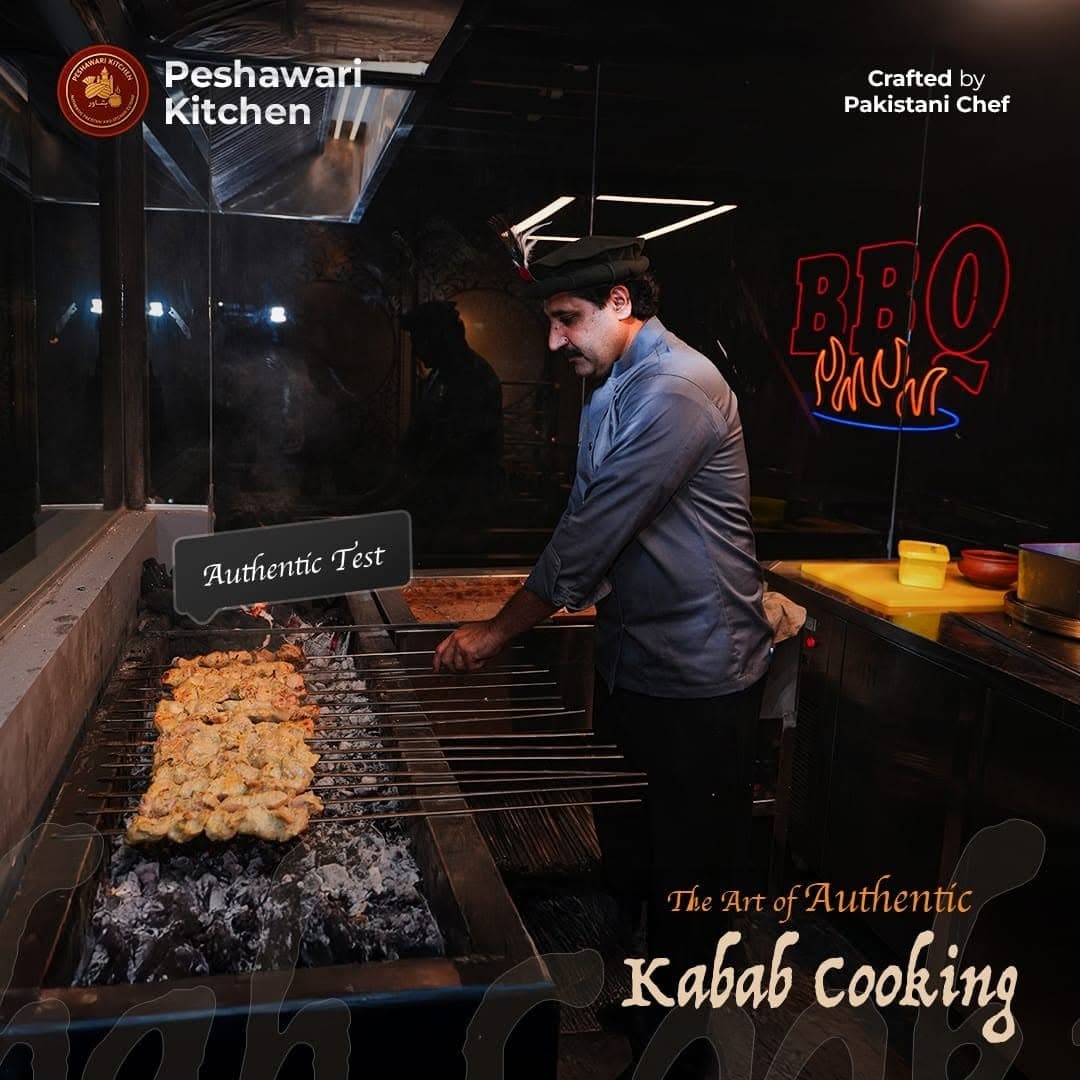
Zubair Khan learned his craft on the charcoal sigri and the iron tawa of Peshawar, where kabab is not a category but a calling. Chapli kababs pressed by hand with pomegranate and green chilli, seekh kababs turned until the surface turns mahogany, beef cuts that leave the grill still sizzling on the platter. He reads coals the way other cooks read a clock: when the heat is right, when the fat renders, when to pull a skewer before it crosses from char to burn. If smoke and fire define the plate, it almost certainly passed through Zubair's station.

Abid Khan

Karahi Specialist

Abid Khan

Peshawar, Pakistan

Abid Khan is our karahi specialist, trained in the iron-wok traditions of Peshawar where a meal often ends with a shared karahi still bubbling at the centre of the table. Mutton Shinwari Karahi with bone-in meat, tomato, salt, and green chilli. Charsi karahi cooked the frontier way: salt, fat, fire, and time. He reads the karahi by sound and steam, knowing when the gravy has tightened and the meat is ready to leave the flame. At Peshawari Kitchen, every karahi that reaches your table passes through his hand.

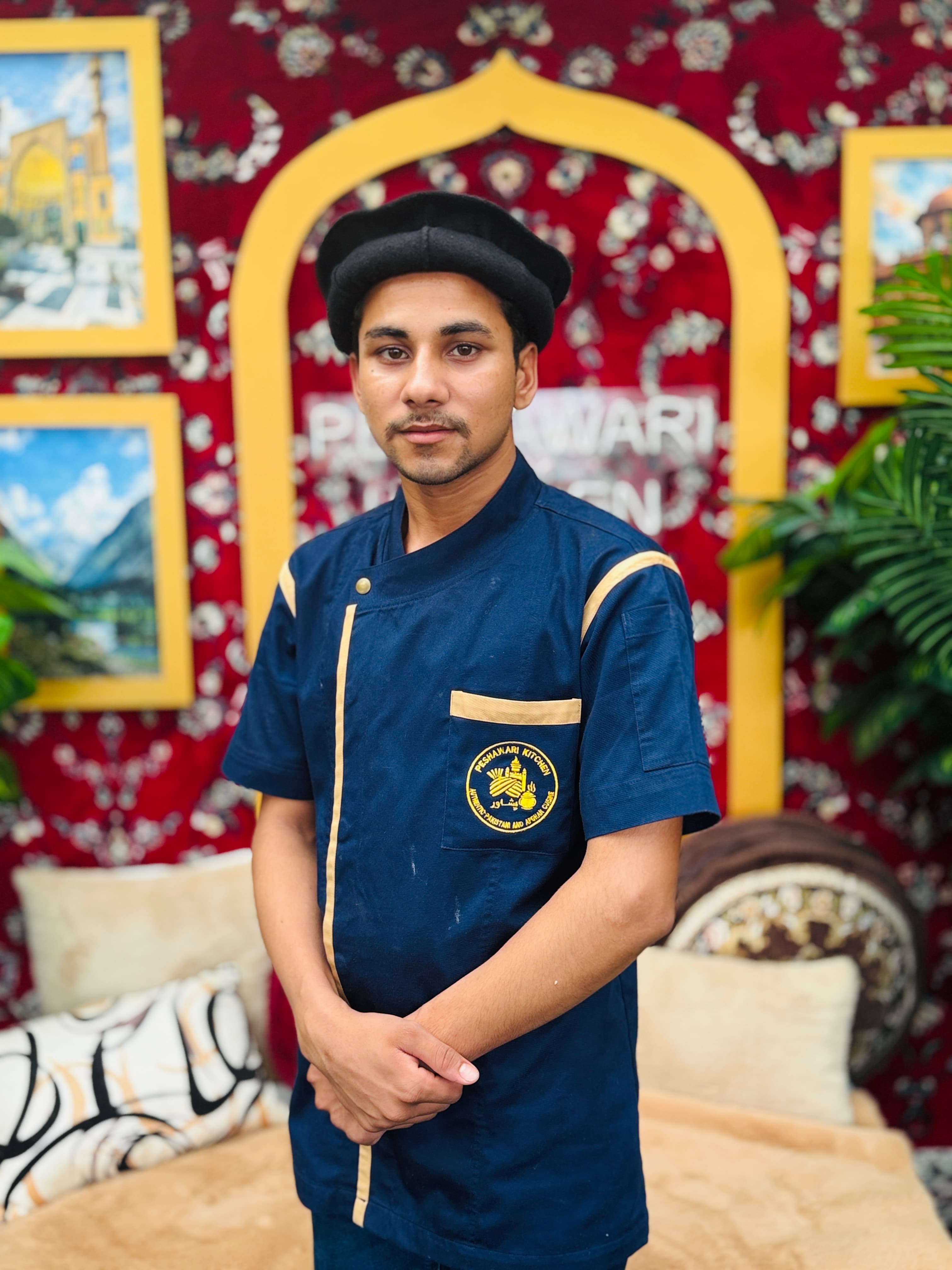
Faisal Khan

Tandoor & Bread Specialist

Faisal Khan

Peshawar, Pakistan

Faisal Khan's domain is the tandoor and the tawa, the two fires that anchor every Peshawari meal. Naan and roti leave the oven still breathing steam; paratha is layered and fired on the tawa until the flakes separate and the edges crisp. He learned this work in Peshawar, where bread is not a side but the foundation of the table, the thing that carries gravy, scoops slow-braised meat, and arrives before the guest has finished reading the menu. Every loaf that anchors a meal passes through his hands. When the bread is wrong, the whole plate feels wrong. Faisal does not allow that.

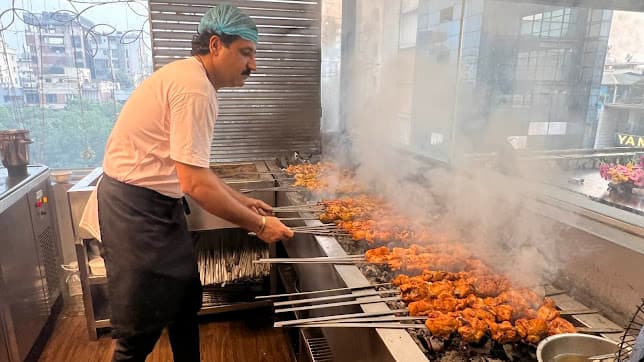
A Peshawari Kitchen chef grilling skewers over open flame
THE THEATRE OF FIRE · LIVE FLAME
The Open Kitchen

The Theatre of Fire

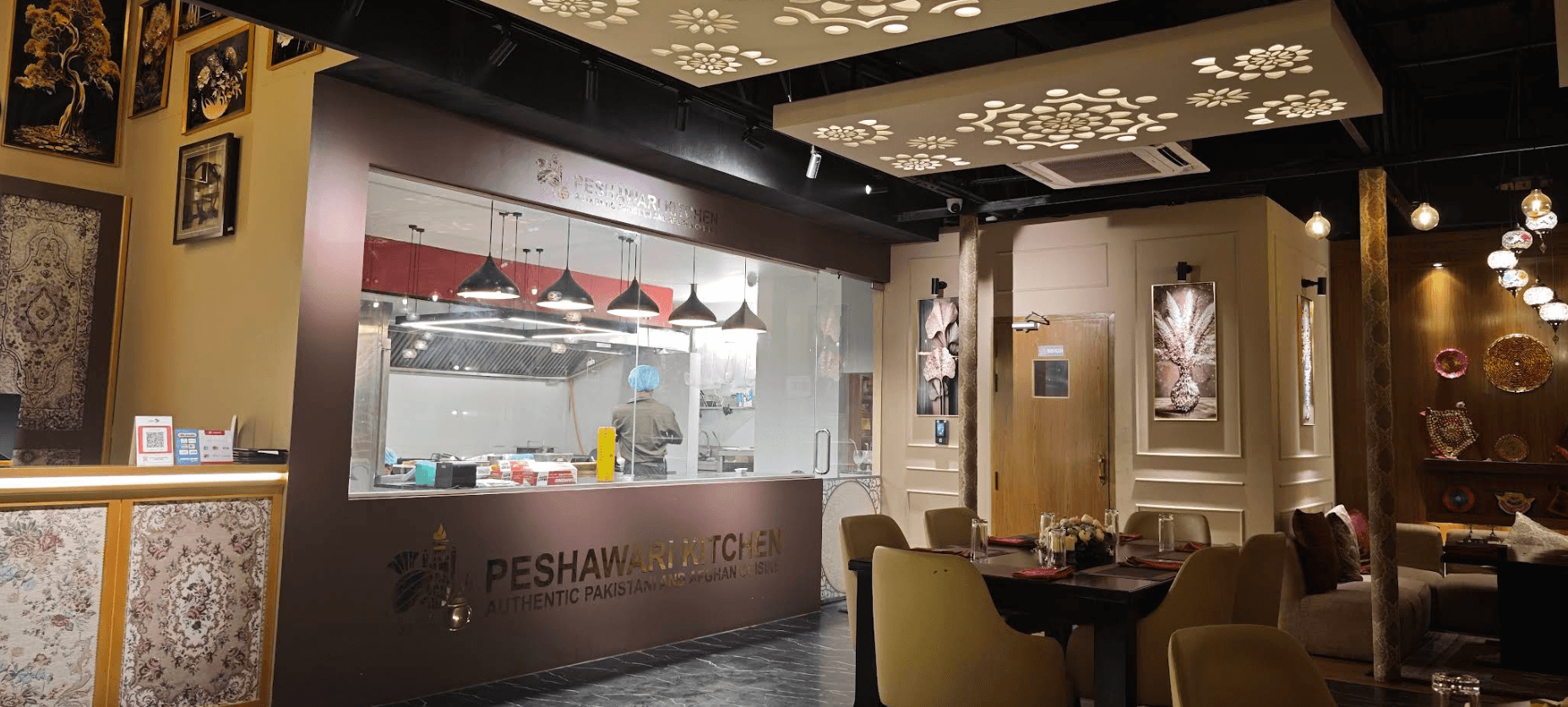
Behind clear glass, the cooks work in the open: coals fanned by hand, skewers rotated by hand, dum-sealed biryanis tapped open at the table. Nothing about the frontier kitchen is hidden, and nothing about it is hurried.

  • Hand-tossed artisan breads, straight from the tandoor
  • Sizzling sigri prepared over reclaimed charcoal
  • Twelve-hour signature roasts, sealed in clay
  • An entire wall of bubbling karahis at every service
The vibrant heart

The Frontier Hall

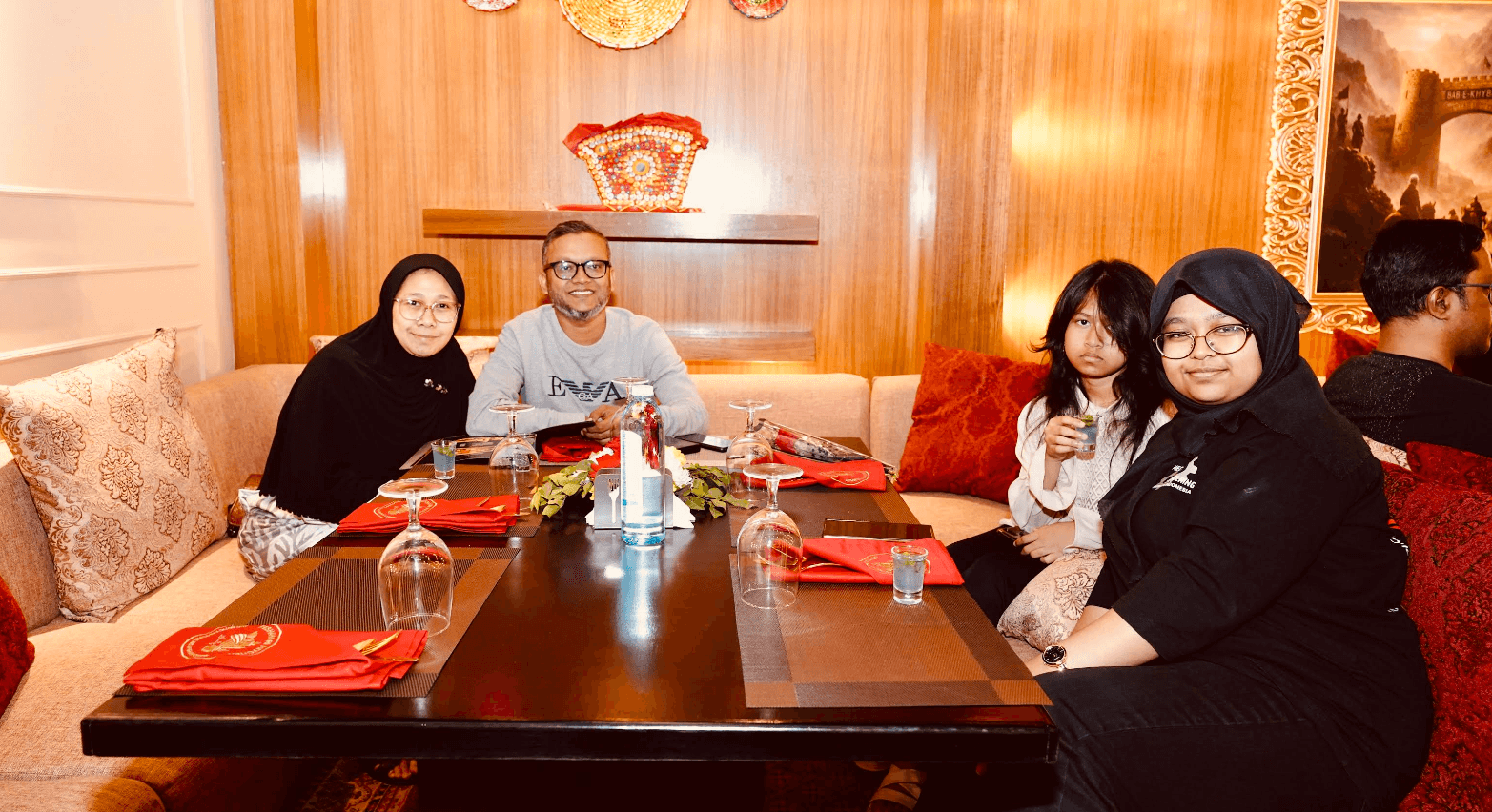
Open seating beneath hand-mosaic lanterns, carved Pashtun screens dividing the room into patterned booths. The kitchen lives behind clear glass, coals fanned by hand, skewers turning at the sigri. This is where most of the house eats: vibrant, in motion, the heart of the room.

  • Hand-mosaic Turkish-style pendant lanterns
  • Carved Pashtun lattice screens
  • Open kitchen behind clear glass
  • Patterned booth seating, set for two to six
Open-air dining

The Lantern Terrace

Up one flight and into the open sky. The rooftop runs along the chargrill, skewers glowing on the coals just past the railing, and a fresh juice bar pressing pomegranate, mango and seasonal fruit alongside. Wooden chairs, festive overhead canopy, the soft evening hum of the city beyond.

  • Open-air rooftop beneath a glass canopy
  • Live chargrill in plain view
  • Fresh-pressed juice bar
  • Casual seating, drop-in or reserved
Communal dining

The Floor Mehfil

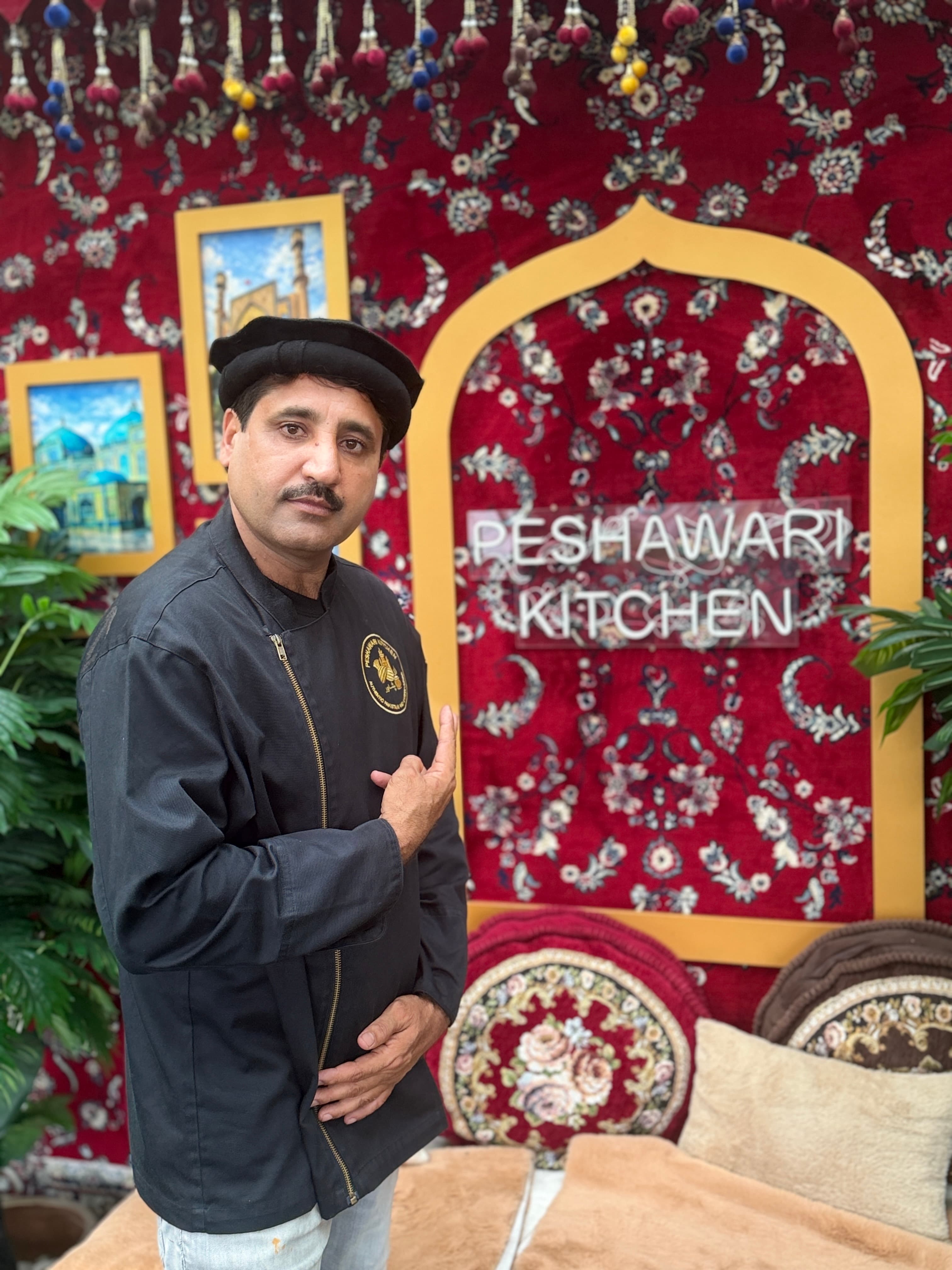
“No head of the table.” Cushioned divans around a shared table, embroidered pillows in deep red, a Khyber landscape watching from the wall.

  • Cushioned divans around a shared table
  • Aftabah Taza: copper hand-washing tradition
  • Hammered copper sharing platters
  • Afghan Kahwa to finish: saffron and cardamom
Private dining

The Sovereign Chamber

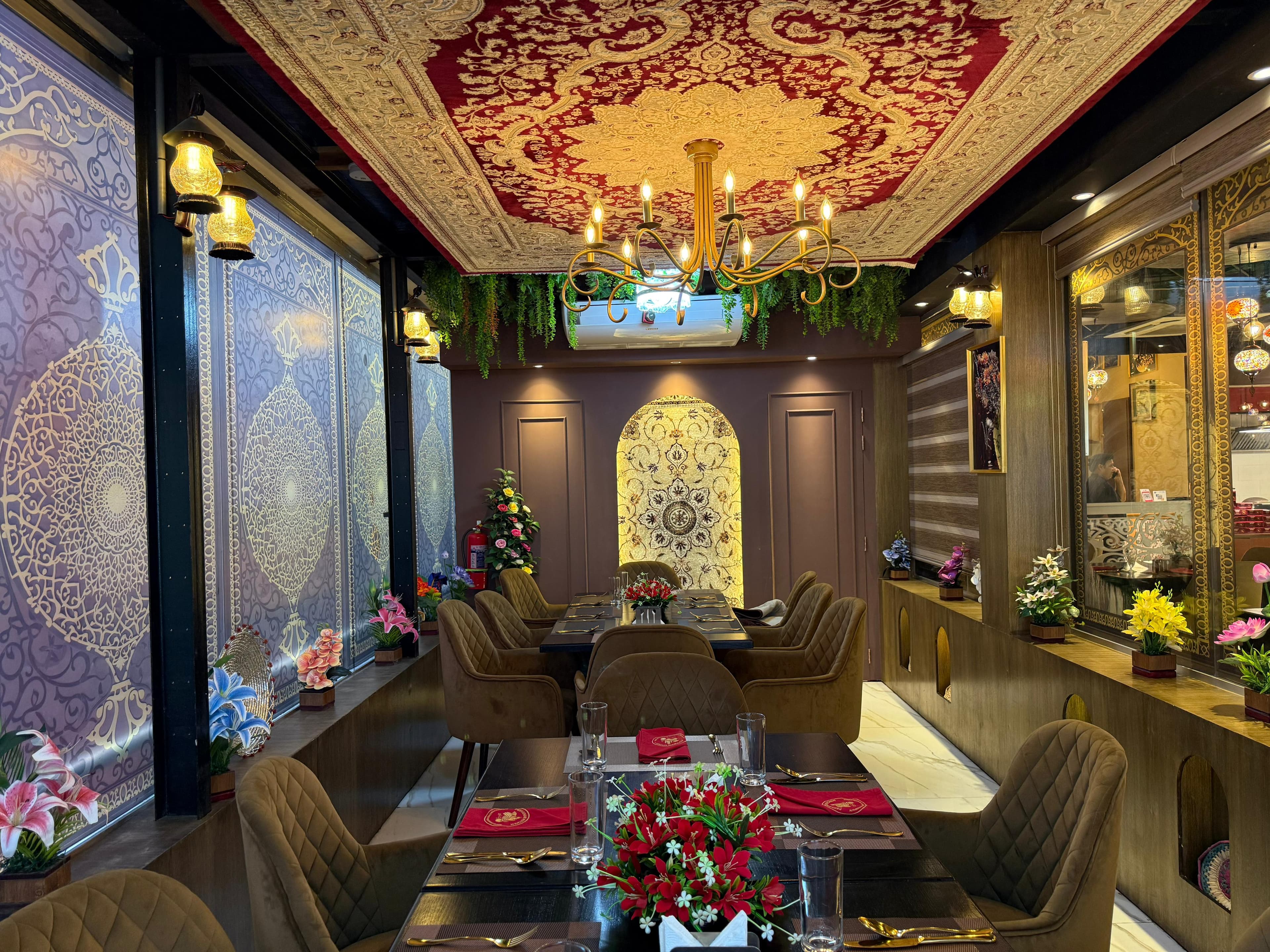
For absolute discretion. A private chamber crowned by a hand-knotted carpet set into the ceiling and a backlit mihrab on the focal wall. Quilted velvet chairs around a long polished table for twelve, an ornate gold candelabra above. For high-level meetings, intimate celebrations, or evenings that belong to you.

  • Long polished table seats twelve
  • Hand-knotted carpet inset into the ceiling
  • Backlit mihrab on the focal wall
  • Dedicated khansaman, tailored menu

Plan your visit

Come sit at our table.

Reserve ahead for your preferred room and time, especially on weekends.